
TetraDENSITY is a database that includes georeferenced population density estimates of tetrapod species worldwide. It was meant to be a source for macroecological research and biodiversity conservation analyses, but also to be a reference database for population density estimates for field studies.
The database was originally described and presented in the publication:
Santini L., Isaac N.J.B., Ficetola G.F. 2018. TetraDENSITY: a database of population density estimates in terrestrial vertebrates. Global Ecology and Biogeography 27(7): 787-791
This first version included >18,000 estimates for 2100 species from ~950 studies, and only focused on terrestrial species.
We recently published an updated and much expanded version of the database, presented in:
Santini L., Mendez Angarita V.Y., Karoulis, C., Fundarò D., Pranzini N., Vivaldi C., Zhang T., Zampetti A., Gargano S.J., Mirante D., Paltrinieri L. TetraDENSITY 2.0 – A database of population density estimates in Tetrapods. Global Ecology & Biogeography, doi: 10.1111/geb.13929
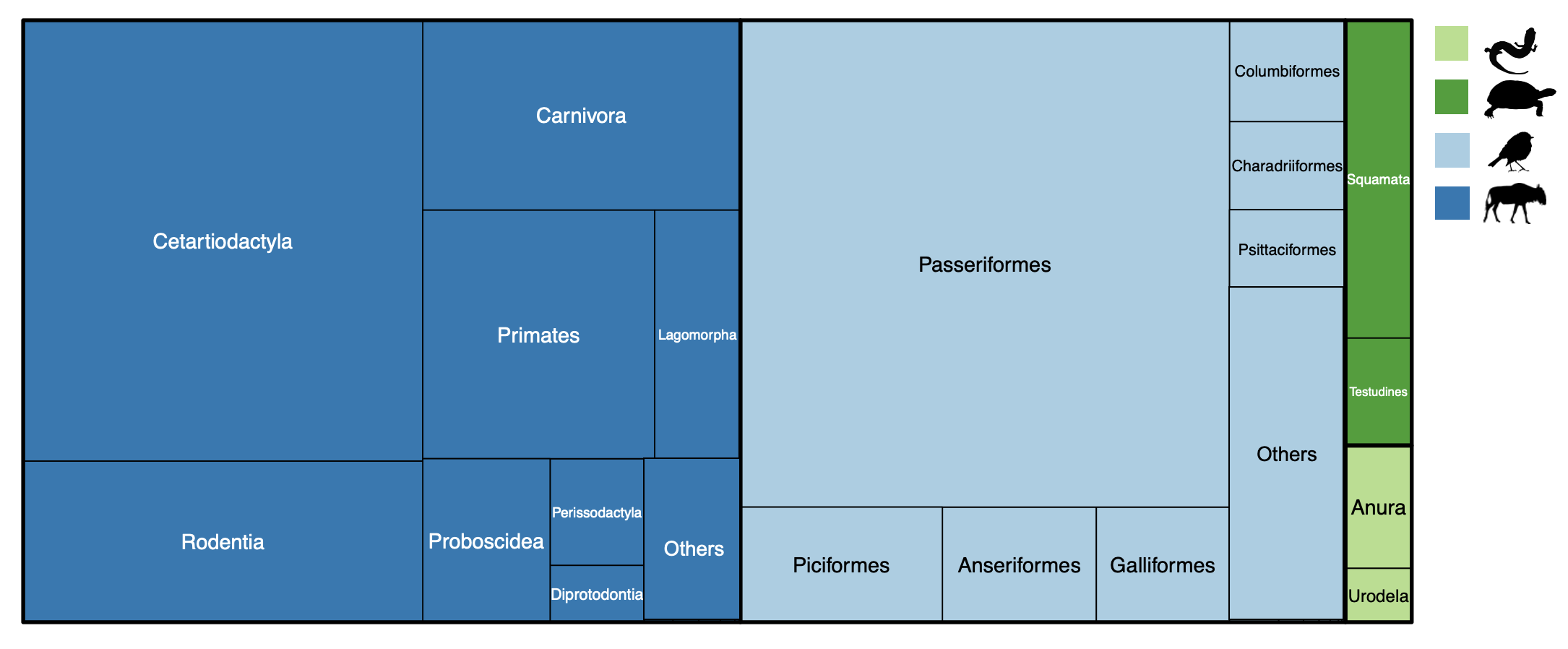
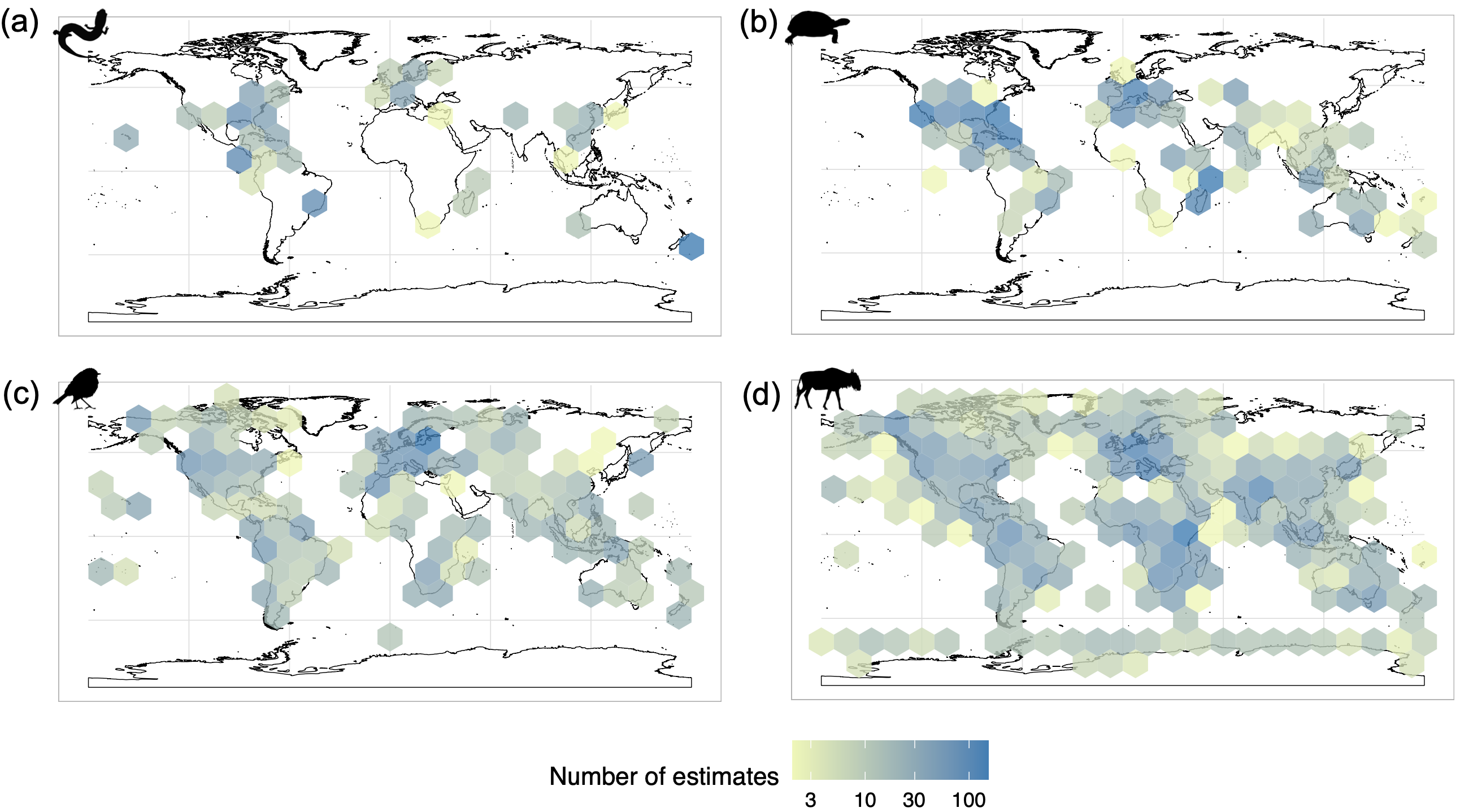
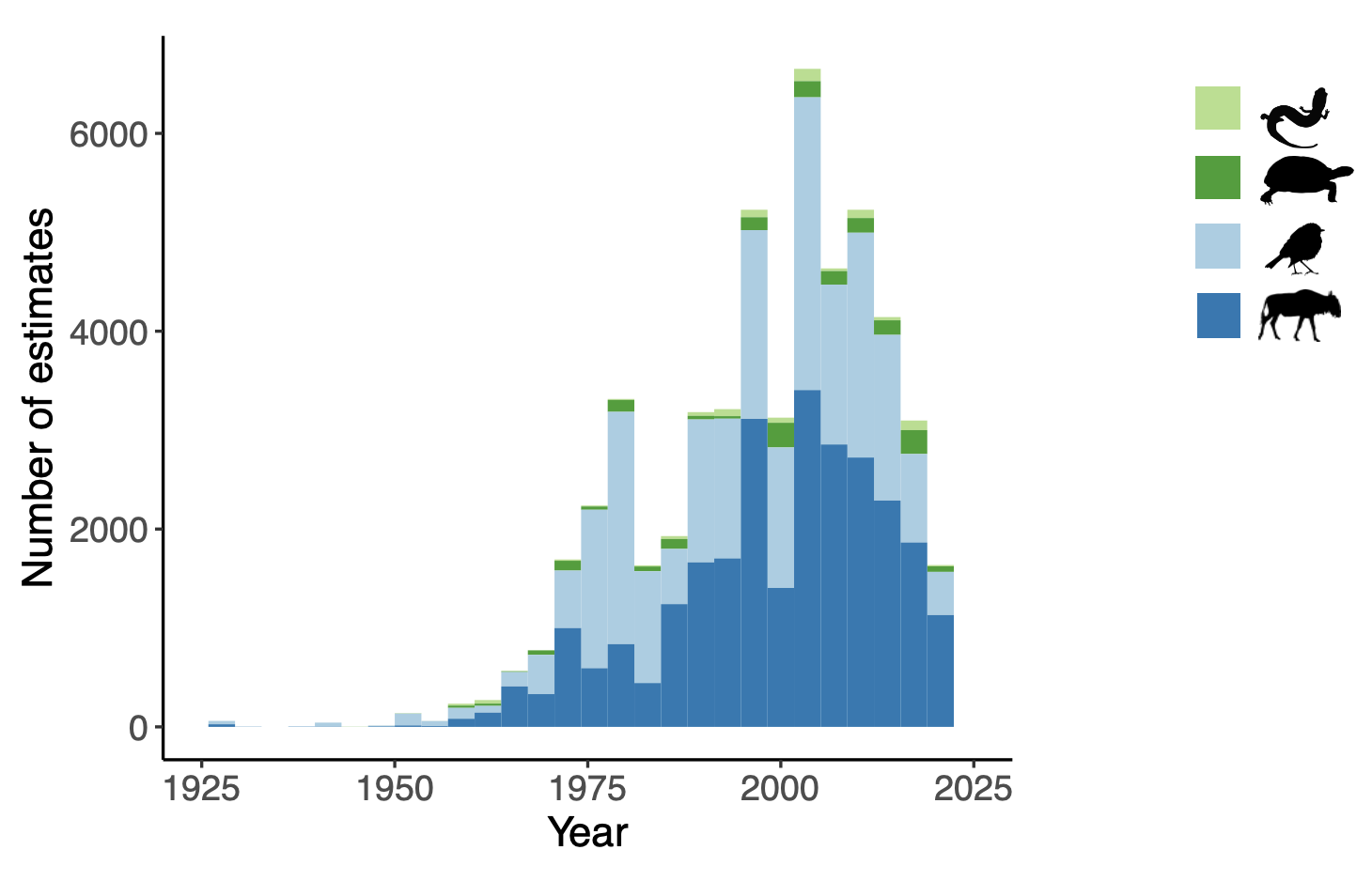
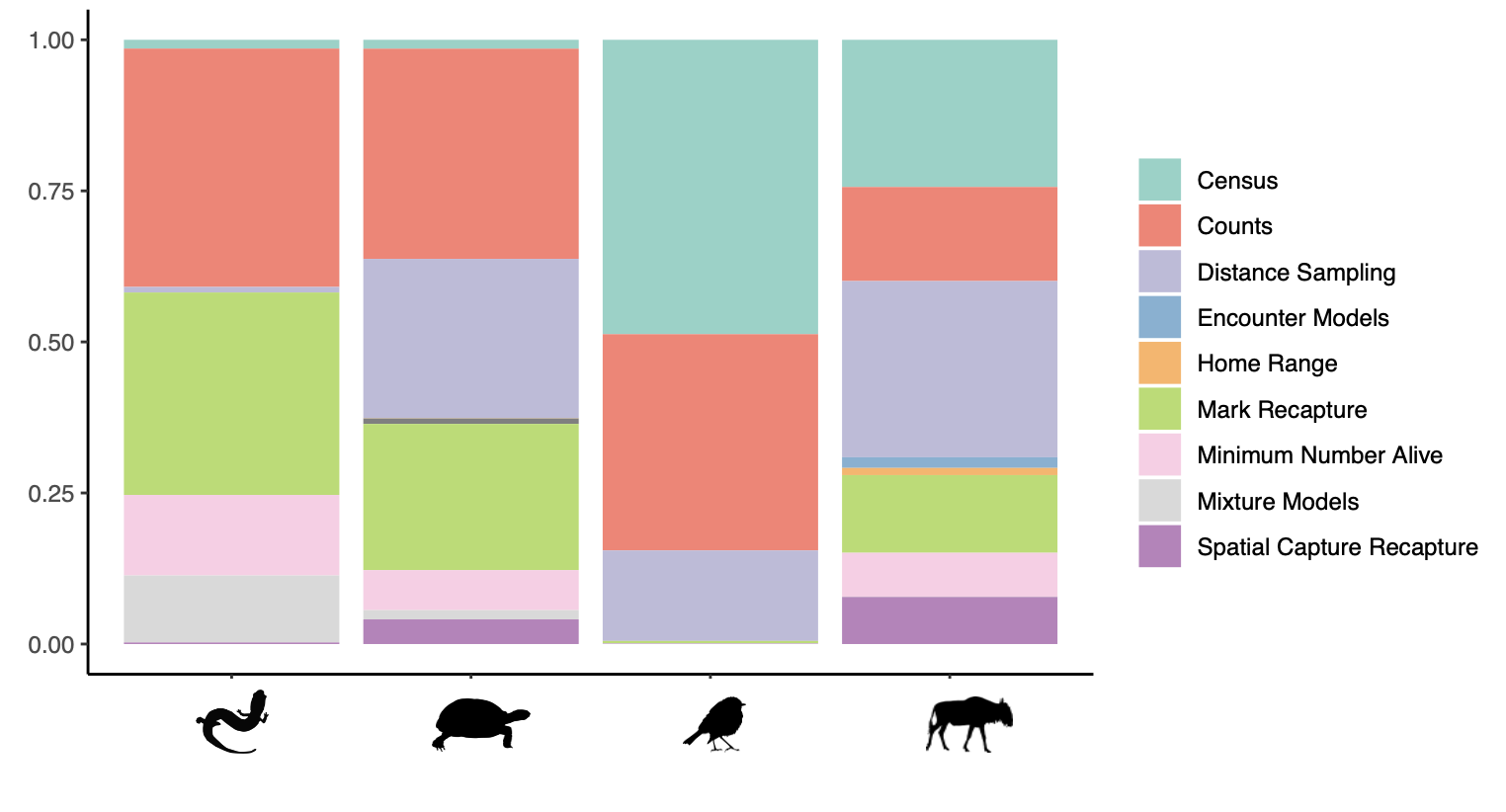
Including >54300 estimates for 3717 species of both terrestrial and marine tetrapods, associated with error estimates when available.
TetraDENSITY will continue to grow over time. Please get in contact if you want to highlight a recent publication to feature in the next version of TetraDENSITY. If you want to access the most recent version of the database, please get in contact.
Research papers that used the database:
Žliobaitė, I., Spiridonov, A., & Sinkkonen, V. How many indricotheres would have lived in Helsinki?. Ann. Zool. Fennici, 61, 131-147.
Pranzini, N., Maiorano, L., Cosentino, F., Thuiller, W., & Santini, L. (2024). The role of species interactions in shaping the geographic pattern of ungulate abundance across African savannah. Scientific Reports, 14(1), 19647.
Witting, L. (2024). Population dynamic life history models of the birds and mammals of the world. Ecological Informatics, 80, 102492.
Vidal-Cordasco, M., Terlato, G., Ocio, D., & Marín-Arroyo, A. B. (2023). Neanderthal coexistence with Homo sapiens in Europe was affected by herbivore carrying capacity. Science Advances, 9(38), eadi4099.
Wang, L., Cromsigt, J. P., Buitenwerf, R., Lundgren, E. J., Li, W., Bakker, E. S., & Svenning, J. C. (2023). Tree cover and its heterogeneity in natural ecosystems is linked to large herbivore biomass globally. One Earth 6(12), 1759-1770
Pranzini N., Bertolino S., Santini L. 2023. Predicting population size at large scale: the case of two large felids. Global Ecology and Conservation, e02677
Witting, L. (2023). On the natural selection of body mass allometries. Acta Oecologica, 118, 103889
Street, S. E., Gutiérrez, J. S., Allen, W. L., & Capellini, I. (2023). Human activities favour prolific life histories in both traded and introduced vertebrates. Nature Communications, 14(1), 262.
van Eeden, L. M., & Dickman, C. R. (2023). Estimating the number of wild animals affected by Australia’s 2019–20 wildfires. Australia’s Megafires: Biodiversity Impacts and Lessons from 2019-2020.
Santini L., Tobias J., Callaghan C., Gallego-Zamorano J., Benítez López A. 2023. Global patterns and predictors of avian population density. Global Ecology and Biogeography. doi: 10.1111/GEB.13688
Wolff N.H., Visconti P., Kujala H., Santini L. Hilbers J.P., Possingham H.P., Oakleaf J.R., Kennedy C.M., Kiesecker J., Fargione J., Game E.T. (2023). Prioritizing habitat protection to minimize global mammal extinctions. One Earth, 6(11): 1564-1575
Mason, A. R., Gathorne‐Hardy, A., White, C., Plancherel, Y., Woods, J., & Myers, R. J. (2022). Resource requirements for ecosystem conservation: A combined industrial and natural ecology approach to quantifying natural capital use in nature. Ecology and Evolution, 12(8), e9132.
Broekman M., Hilbers, J.P., Schipper A.M, Benítez-López A., Santini L., Huijbregts M.A.J. 2022. Time-lagged effects of habitat fragmentation on terrestrial mammals in Madagascar. Conservation Biology, doi: 10.1111/cobi.13942
Santini L., Benítez López A., Dormann C.F., Huijbregts M.A.J. 2022. Population density estimates for terrestrial mammals. Global Ecology & Biogeography, doi: 10.1111/geb.13476
Pie, M. R., Caron, F. S., & Divieso, R. 2021. The evolution of species abundances in terrestrial vertebrates. Journal of Zoological Systematics and Evolutionary Research, 59(8), 2562-2570.
Wang, Y.X.G., Matson, K.D., Santini L., Visconti P., Hilbers J., Huijbregts M.A.J., Xu Y., Prins H.H.T., Dobson A., Allen T., Huang Z.Y.X., de Boer W.F. 2021. Mammal assemblage composition predicts global patterns in emerging infectious disease risk. Global Change Biology, 27(20): 4995-5007
Santini L., Isaac N. 2020. Rapid Anthropocene realignment of allometric scaling rules. Ecology Letters 24(7): 1318-1327
Gonzalez-Suarez M., Gonzalez-Voyer A., von Hardenberg A., Santini L. 2020. The role of brain size on population density in mammals. Journal of Animal Ecology 90(3): 653-661
Tucker M, Santini L., Carbone C., Mueller T. 2020. Mammal population densities at a global scale are higher in human-modified areas. Ecography, doi: 10.1111/ecog.05126
Skyes L., Santini L., Etard A., Newbold T. Different forms of rarity interact to determine species’ responses to land use. Conservation Biology doi: doi.org/10.1111/cobi.13419
Santini L., Butchart S.H.M., Rondinini C., Benítez-López A., Hilbers J.P., Schipper A., Cengic M., Tobias J.A., Huijbregts M.A.J. 2019. Applying habitat and population density models to land cover time series to inform IUCN Red List assessments. Conservation Biology 33(5): 1084–1093
Santini L., Pironon S., Maiorano L., Thuiller W. 2019. Addressing common pitfalls does not provide more support to geographical and ecological abundant-centre hypotheses. Ecography 42(4): 696-705
Santini L., Isaac N.J.B., Maiorano L., Ficetola G.F., Huijbregts M.A.J., Carbone C., Thuiller W. 2018. Global drivers of population abundance in terrestrial vertebrates. Global Ecology and Biogeography 27(8): 968-979
 ecaslab.com